



Phantom Israel Part 2
Introduction
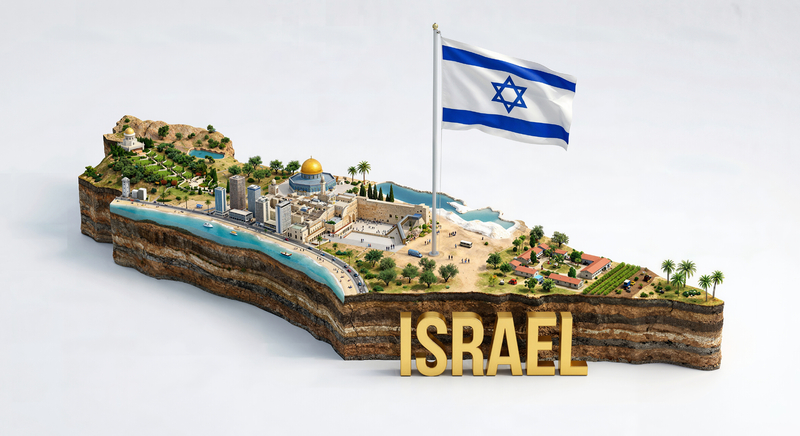
As I pen these words in March 2026, Israel and the United States are locked in an aggressive attempt to permanently damage the repressive regime of the Islamic State of Iran. With that important goal, the objectives of the US and Israel are to disrupt Iran’s program to refine enough nuclear material to build a nuclear bomb and to crush Iran’s aim to finance world terrorism aimed at the destruction of the modern state of Israel.

© Photobank2 | Dreamstime.com
While my purpose of this post is NOT to argue the pros and cons of the current war effort, I am concerned with the many voices that are blaming Israel for “pulling the US into another war in the Middle East.”
Sadly, a sizeable force of Israel’s detractors exists inside evangelical Christianity. Many of these evangelical influencers are opposed to any effort that positions Christians in a supportive role to the nation of Israel. Therefore, to prevent any hint of evangelical support of Israel, Christian critics of the modern Jewish state are bent on a mission to delegitimize the modern state of Israel. How?
Some evangelical leaders are adamant in denying that today’s Jewish people have any connection to the biblical Israel. In other words, the Jewish people living in Israel and the Diaspora outside Israel are “fake Jews.”
Consequently, why would Bible-believing Christians want to support a nation of impostors who are pretending to be part of the nation that Yeshua, the Messiah of Israel, belonged to while He was on earth 2000 years ago?
Then we witness other Bible-clutching leaders and theologians who claim the Church is the true Israel. In other words, a more genuine spiritual Israel, i.e., evangelical Christians, are now replacing Jewish people who are OUTSIDE the Body of followers of Yeshua.
Where do these Israel-denying efforts by Christians leave the Jewish people? In part 1 of this post, I surmised that any denial of Israel’s rightful place in the ongoing promises of God assigns Israel to a “phantom status.” If Gentile followers of Yeshua replace Jewish people, or if Jews are proven to have no connections to the biblical nation of Israel, the Jewish state is a nebulous nation with a “stolen identity.”
This post will answer one question: “Who is the nation of Israel?” Are those, like myself, who call themselves Jewish, embracing a false identity? Most importantly, is there any indication in the New Covenant Scriptures that the nation of Israel no longer exists and has now been replaced by the Church? If so, we should be able to find solid evidence in the NT scriptures that Israel’s identity has undergone a radical transformation. The modern state of Israel is nothing more than a “p” antom Israel.”Israel’s identity
The Definition of Israel
The best place to start to respond to those confused about the identity of the nation of Israel is to define Israel. A well-respected and biblically versed pastor admitted to me recently that he was confused about the identity of Israel. He wondered: Is Israel defined by the government of the Jewish state? Is Israel the Jewish religion or Judaism? Could the identity of Israel be determined only by the land the Jewish people currently inhabit?
Bottom line: This sincere cleric was wondering whether the modern state of Israel is the same as the biblical Israel we observe in the Torah, the Writings, the Prophets, and the New Testament.

I wanted to say “yes” to everything he suggested. However, though this pastor could not articulate a definition of Israel, he was very clear when he asserted that evangelicals cannot support modern-day Israel.
To many pastors, Israel, as seen in the Scriptures, does not now exist, and Israel remains a biblical phantom. Like a Las Vegas Elvis impersonator, the Israel of today is a cheap imitation of the real biblical nation found in the Word of God.
If Israel remains a phantasm, Replacement Theology (RT) teachers can ignore Israel and feel confident in their triumphant evangelical attitude towards non-believing Jews. To them, the Church has replaced Israel, and unless a Jewish person is committed to Yeshua, they remain in spiritual limbo.
In addition, many of these Christian leaders feel no spiritual obligation to view the current events in Israel any differently from the atrocities that occur in any other nation. In their view, Israel is no longer God’s chosen nation. This indifference to the chosen status of Israel often results in an indifference to the aggressive attacks on Israel by the terrorist entities that want to destroy it.
In contrast, once the evangelical view of Israel aligns with Scripture, Christian influencers are forced to face the promises God bestowed on His people. Then they must consider supporting the modern Jewish state.
With deep sorrow, during the present war campaign against the radical Islamic regime in Iran, I have witnessed pastors pray about the conflict, but omit any reference to Israel.
How are we to define Israel and remove the nation from its phantom status?
Plain and Simple, Israel is a People.
A simple definition is that Israel is a “people.” Am Yisrael—the people of Israel. The people of Israel, both inside and outside the Jewish state, share a history, language, culture, literature, religion, and customs that define Israel.
I view myself as an example of what I communicate about membership in the Jewish people. Though I live outside the modern state of Israel, I still enjoy a deep loyalty to Israel as a Jewish Zionist. I share the same history, culture, language, literature, and customs with other Jewish people.

Rawpixelimages | Dreamstime.com
Because I have accepted Yeshua as the long-awaited Messiah of Israel, many of my fellow Jews consider that I am NO LONGER Jewish. Of course, I respectfully disagree.
In response to this emotional accusation, I am convinced that those who maintain this position have mistakenly boiled Jewish identity down to a religion. Are Jewish Buddhists still members of the tribe? Atheistic Jews? Jewish people steeped in New Age thinking?
We need to refrain from reducing our understanding of Jewish identity to a bite-sized definition. It’s so easy for a cynic to deny a legitimate identity of Israel because that detractor adheres to a rationale that sets up a criterion for Jewish identity that is pre-determined to fail.
To give us a workable definition of Israel, Israeli lecturer and podcast historian, Haviv Rettig Gur observes on one of his podcasts, Ask Haviv Anything, “We have a religion, but we are not a religion. Israel can only be defined as a people that includes all the above categories.” Another definition states “Ιsrael is a tribal group with a shared history, a homeland, and a culture.” Even if a Jewish person ignores their culture, language, religion, and homeland, are they still Jewish? Yes, of course.
Israel Remains a People Despite Its Spiritual Condition
I prefer to utilize the biblical definition of a member of the nation of Israel. In Genesis 12:3, God promises Abraham he will give birth to the Jewish nation, “And I will make of you a great nation, and I will bless you and make your name great, so that you will be a blessing” (Genesis 12:2 ESV).
In ensuing passages, God promises Abraham a specific land: Israel. However, the God of Israel never states that Israel is only Israel if it is within the geographical territory known as Israel. Neither did God confine true Israelites to those who practice their faith, speak Hebrew, or enjoy Jewish food.
The prophet Jeremiah warned the Jewish people incessantly to repent of their rebellion against God lest they be sent out of the land and into captivity. In addition, Jeremiah spoke to fellow Jewish people who were already living in exile in the northern kingdom of Babylon. The prophet did not threaten the exilic community that God would remove their identity as a nation since they lived in captivity.
Here is one example of the myriad of passages in which God warns Israel of exile, but He never eliminates Israel’s identity as a people:
“Go and shout this message to my people in the countries in the north. Tell them, ‘Come back to me, wayward Israel,’ says the LORD. ‘I will not continue to look on you with displeasure. For I am merciful,’ says the LORD.‘I will not be angry with you forever. (Jeremiah 3:12 NET-1ST, bold formatting mine).
The Lord depicts Israel as “wayward.” Nevertheless, His delinquent people still remain His chosen nation. God states regarding Israel, “I will not be angry with you forever.”
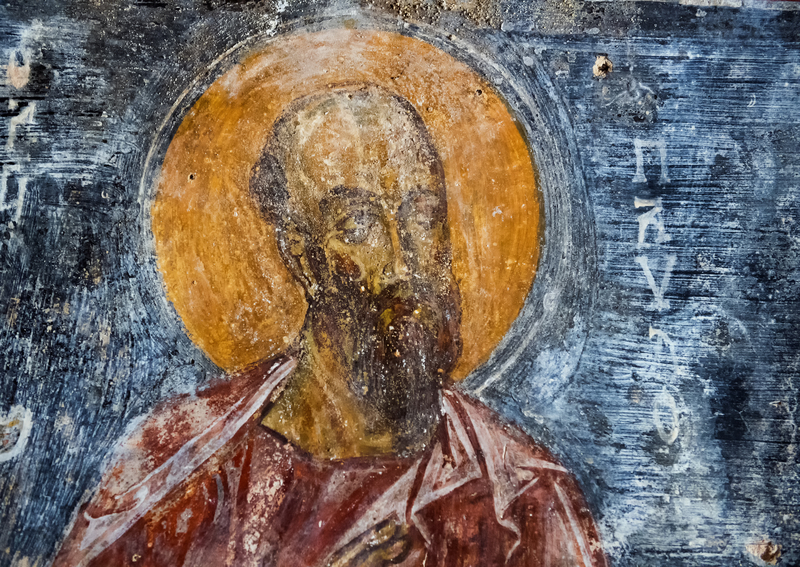
When the emissary Paul wants to make the case that God has not rejected Israel, he employs his own Jewish identity as proof that the Lord has not turned His back on His people: “I ask, then, has God rejected his people? By no means! For I myself am an Israelite, a descendant of Abraham, a member of the tribe of Benjamin (Romans 11:1 ESV).
Although Saul was born in Tarsus (modern-day Turkey) and was a Roman citizen, this major influencer of orthodox messianic theology still considered himself an Israelite.
Israel is Viewed as a People by their Enemies.
Even Israel’s ancient enemies observed that Israel has a culture, traditions, and religious practices that are unique to it. This observation is especially true when Israel had been exiled from their land.
Though a large remnant of the people of Israel was in captivity, their enemies did not view the homelessness of these Jewish inhabitants as an excuse to deny them their identity as a people.
In the Book of Esther, Haman was an official promoted by Ahasuerus, king of Persia, to a position of great authority. The Book of Esther reads, “After these things King Ahasuerus promoted Haman the Agagite, the son of Hammedatha, and advanced him and set his throne above all the officials who were with him” (Esther 3:1 ESV).
When Haman attempted to convince Ahasuerus to destroy the Jewish residents living in Persia, he recounted to him,
There is a certain people scattered abroad and dispersed among the peoples in all the provinces of your kingdom. Their laws are different from those of every other people, and they do not keep the king’s laws, so that it is not to the king’s profit to tolerate them. If it please the king, let it be decreed that they be destroyed (Esther 3:8-9 ESV).
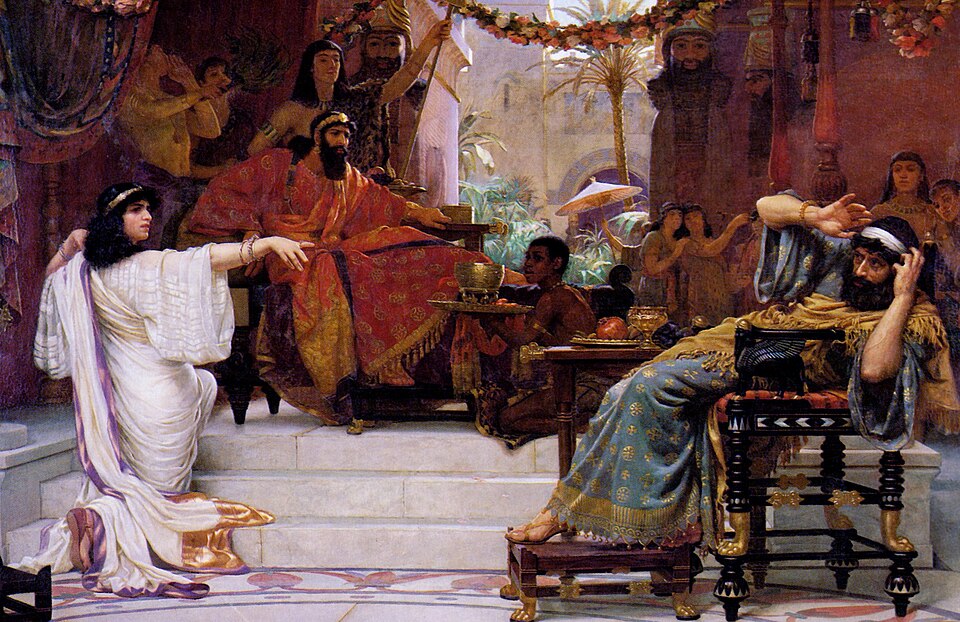
This unrighteous Persian official perceived Israel to be a “people” despite their exiled state. The Jewish people of Persia, according to the Jew-hating Haman, did not assimilate into the Persian kingdom and lifestyle. In fact, he hated them because they remained a nation!
In addition, the Jewish people held captive in Babylonia before the Persian defeat of the Babylonians still viewed themselves as members of the Jewish commonwealth. In Psalm 137, the Jewish captives in Babylonia voiced their desire to return to the land out of their loyalty to Jerusalem:
How shall we sing the LORD’s song in a foreign land? If I forget you, O Jerusalem, let my right hand forget its skill! Let my tongue stick to the roof of my mouth, if I do not remember you, if I do not set Jerusalem above my highest joy! (Psalm 137:4-6 ESV).
Nevertheless, Christian theologians and pastors still question the existence of Israel because the modern state is not a theocracy, and a large majority of Jewish people live outside their homeland.
Even the infamous Jew hating Haman marked the former residents of the Jewish homeland as a “people.”
Israel as a Nation During the History of the Early Messianic Faith
Israel in the writings of Rabbi Shaul
Rabbi Shaul, author of the New Covenant letter to believers in Rome, continually upheld Israel’s historic identity. At this time, Israel was under the thumb of the Roman Empire and was not an independent state. In addition, many Jewish people were no longer living in Israel, but in the diaspora, or the Galut.
This reality did not stop Paul from acknowledging the special place Israel still has in God’s economy. In addition, he maintained that despite Israel’s refusal to accept Yeshua, they remained the nation of people, known as Israel.
In his correspondence to the believers in Rome, Shaul declared of the Jewish people:
They are (present tense) Israelites, and to them belong the adoption, the glory, the covenants, the giving of the law, the worship, and the promises. To them belong the patriarchs, and from their race, according to the flesh, is the Messiah, who is God over all, blessed forever. Amen. (Romans 9:4-5 ESV, bold formatting mine).
Paul makes it clear that the nation’s refusal to accept their Messiah did not alter their chosen national status before God. The apostolic author could not have been clearer about God’s ongoing commitment to Israel in his words in Romans 11:28-29, “As regards the gospel, they are enemies for your sake. But as regards election, they are beloved for the sake of their forefathers. For the gifts and the calling of God are irrevocable” “Romans 11:28-29 ESV, bold type, mine).
Rkckwwjd | Dreamstime.com
I strongly advocate without apology that Shaul’s definition of Israel’s identity stands in contrast to those who wonder, “Who is Israel?” There is nothing in the Scriptures or ensuing history itself that says that God flipped the deck and redefined the identity of the Jewish people. This highly influential contributor to messianic theology plainly declares, “they are Israel, to whom belongs the adoption . . .” The tense Paul uses is seen in the words, “οἵτινές εἰσιν Ἰσραηλῖται . . . ” (Romans 9:4 GNT-T). They ARE Israelites.”
The Greek term εἰσιν is a present-tense verb meaning “they are.” Shaul could have used the imperfect indicative verb of “to be” [εμηι], which would be ήσαν. The translation would then read, “They WERE Israelites.” If the Church is NOW the true or genuine Israel, it would have made more sense for Shaul to refer to the twelve tribes of Israel as a PAST reality, now replaced by followers of Yeshua.
In all of his thirteen letters to fellow followers of Yeshua, Paul had every opportunity to substantiate the contemporary claim of Replacement Theology: God is finished with Israel and the Church is now the “true Israel. BUT he did not.
If there exists a new definition of the people of Israel in light of their refusal to acknowledge the messiahship of Yeshua, we should be able to view this revised definition in the Book of Acts.
Israel As Seen in the Book of Acts
As I peruse the historical Book of Acts, the early followers of Yeshua consistently address unbelieving Israel as “Israel.” Furthermore, if the Church is now the true Israel, why do Peter, Stephen, and Paul, early Jewish followers of Yeshua, still address the Jewish people and their leaders as the “people of Israel”?
Passages in Which New Covenant Speakers Address Israel Directly
We find no evidence that the early adherents to the messianic faith addressed the Jewish people as “former Israel” in contrast to the Church as the “true Israel.”
We observe several passages in the Book of Acts where Jewish people who have not gravitated towards faith in Yeshua remain identified as “men of Israel.” Check Acts 2:22, “Men of Israel, hear these words: Jesus of Nazareth, a man attested to you by God with mighty works and wonders and signs that God did through him in your midst, as you yourselves know (Acts 2:22 ESV, bold font, mine)
In this passage, Peter addresses his fellow citizens early on in the history of the messianic faith. In this passage from the second chapter of Acts, Peter, aka Shimon, had a prime opportunity to inform his Jewish audience that the New Covenant community, comprising followers of the Jewish Messiah, is NOW the true Israel.
Since the inclusion of Gentiles into the Body of Messiah had not taken place by the second chapter of Acts, Peter had a perfect moment to declare to his fellow Israelites that Yeshua had inaugurated a “new Israel” without any Gentiles.
Throughout the remainder of the Book of Acts, the speakers who address the non-Yeshua believing people of Israel consistently use the term “people of Israel” to describe their audience. To repeat, there is no indication that Paul or Peter now tag their contemporaries as “former” or a “phantom Israel.
Here are several examples of these passages:
Acts 9:15
But the Lord said to him, “Go, for this man is my chosen instrument to take my name to Gentiles, kings, and Israelites. (Acts 9:15)
Acts 10:36
He sent the message to the Israelites, proclaiming the good news of peace through Jesus Christ—he is Lord of all. (Acts 10:36)
Acts 13:17
The God of this people Israel chose our ancestors, made the people prosper during their stay in the land of Egypt, and led them out of it with a mighty arm. (Acts 13:17)
Acts 13:23
“From this man’s descendants, as he promised, God brought to Israel the Savior, Jesus.
Acts 13:24
Before his coming to public attention, John had previously proclaimed a baptism of repentance to all the people of Israel. (Acts 13:23-24).
(All of the above passages are taken from the Christian Standard Bible 2017; bold formatting mine).
At the end of his torrid life, in Acts 28:20, Paul explains to Jewish leaders that he was imprisoned because of his commitment to share the messianic message of redemption with Israel, “For this reason, therefore, I have asked to see you and speak with you, since it is because of the hope of Israel that I am wearing this chain” (Acts 28:20 ESV, bold formatting mine).
Rabbi Shaul had ample opportunity to mirror his alleged replacement theology in his conversations with Jewish people. If Israel is no longer Israel, according to Replacement theology proponents. Paul’s words are nonsensical. The hope of Israel? The Greek states, τῆς ἐλπίδος τοῦ Ἰσραὴλ (Acts 28:20 GNT28-T). The New Living Translation renders this phrase ‘the hope of Israel—the Messiah’. Paul claims he is imprisoned because he continues to proclaim the good news of the Messiah promised to Israel. He does not indicate that God has wiped His hands of the Jewish people. He continues to bring the messianic message to Israel in his final years, as he has since the beginning of his apostolic calling.
Passages in Which New Covenant Speakers Address Israel Indirectly
In other passages in Luke’s Acts, the speaker often refers to Israel indirectly or in the third person (Acts 7:23; 9:15; 10:36; 13:17, 23, 24; 21:28). In all of these cited passages, Israel is referred to as a historical nation identified with the Israel described in Jewish Scriptures.
Acts 7:23 “When he was forty years old, it came into his heart to visit his brothers, the children of Israel.
Acts 9:15 But the Lord said to him, “Go, for he is a chosen instrument of mine to carry my name before the Gentiles and kings and the children of Israel.
Acts 10:36 As for the word that he sent to Israel, preaching good news of peace through Jesus Christ (he is Lord of all),
Acts 13:23 Of this man’s offspring God has brought to Israel a Savior, Jesus, as he promised.
Acts 13:24 Before his coming, John had proclaimed a baptism of repentance to all the people of Israel.
Acts 21:28 crying out, “Men of Israel, help! This is the man who is teaching everyone everywhere against the people and the law and this place. Moreover, he even brought Greeks into the temple and has defiled this holy place.”
(Acts 7:23; 9:15; 10:36; 13:23-24; 21:28 ESV, bold formatting mine).
Check out Acts 13:17 as a further example, “The God of this people Israel chose our fathers and made the people great during their stay in the land of Egypt, and with uplifted arm he led them out of it (ESV, bold font and italics, mine).
Το Paul, there is no question that the historical Jewish people he is referring to are the same as the contemporary Jews he has been proclaiming Yeshua to. The Apostle writes, “the God of this people Israel.” The Greek reads, “ὁ θεὸς τοῦ λαοῦ τούτου [this people] Ἰσραὴλ” “Acts 13:17 GNT28-T). The phrase, “this people,” refers to the Jewish audience standing before Him.
If the historical Israel is no longer the “true Israel”,” Rabbi Shaul had several options to use to refer to the nation: “the God of former Israel” or “the God of the people formerly known as Israel.” Saul never tagged his Jewish contemporaries as “former Jews” who are now replaced by “messianic Jews or Gentiles” or the “Church.” Replacement theology supporters have a lot to explain in their attempt to align their beliefs with the theology of one of the major authors of the Greek Scriptures.
Bottom line: Paul did not hint at all that the members of his Jewish audience were once part of Israel, but are now no longer Israel. He gave no indication that there are two Israels.
Where is the evidence from the Book of Acts that the Israel addressed by Paul is no longer the historical Israel? Knowing firsthand that many in Israel have turned away from Yeshua as Messiah, Paul had the freedom to clue his Jewish friends that they are no longer true Israel. But he didn’t. Why not? Because Paul did not believe nor teach such a fallacy.
Conclusion: There is no such reality as two Israels in Paul’s thinking: one before the nation refused to accept Yeshua and one afterward. According to Replacement theology, after the establishment of the New Covenant assembly, there would now be an ΑΝΟΤΗΕR ISRAEL, the spiritual Israel, aka the Church. I ask again: where is this theology of Israel’s replacement in the teaching of the first-century followers of Yeshua?
Is it acceptable for Paul in the Book of Acts to know an alternative truth about Israel, but never tell his Jewish hearers? Instead, according to Replacement theology, this teaching is primarily found in Paul’s letters to the first-century NT churches.
I will address this teaching by adherents of replacement theology in the final section of this post.
In Early Messianic Theology, Israel was Always a Distinct People
In our last section, we now jump over to the letter Shaul wrote to the congregation at Ephesus. We intend to answer those who might maintain that the references to Israel in the Book of Acts did not reflect a LATER theological definition of the Church.
In other words, as the theological understanding of the Body of Messiah developed and matured, the concept of the Church as the “new Israel” came into being. Yet, the belief that the Church had replaced Israel had not yet appeared in the historical record in the Book of Acts, which records the development of the ekklesia (assembly or Church).
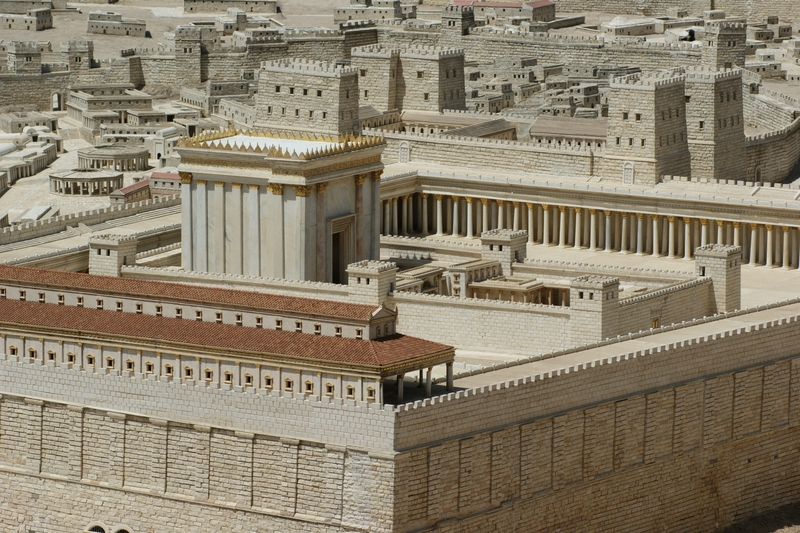
I apply the brakes to this issue by comparing the dates when these two documents were written. The traditional view taken by evangelical scholars is that the Book of Acts was composed around 62-70 A.D. Acts ends with Rabbi Shaul under house arrest in Rome. The book does not end with his death, usually understood to have occurred around 64-67 A.D. In addition, Luke fails to mention the destruction of the Temple (70 A.D). Such a catastrophic event would not escape Luke’s historical mindset.
Regarding Shaul’s letter to the congregation at Ephesus, conservative evangelical scholars hold that the epistle was penned between 60 and 62 A.D. Therefore, Ephesians may have been written before the Book of Acts, describing the activities of the early apostles (emissaries) of Yeshua.
It is way beyond the scope of this blog to take a deeper dive to examine the dating of Shaul’s letter to the Ephesian believers and Luke’s account of the first 34-35 years of the early Jewish followers of Yeshua.
Suffice it to say, in light of the dating of these essential documents, Shaul’s ecclesiology (study concerned with understanding the Church [Pocket Dictionary of Theological Terms, 42]) is already developed and aligned with the terminology and theology of the Church’s relationship with Israel as reflected in the Book of Acts. There is scant evidence of two distinct and contrary theologies: one theological system reflected in Acts and another seen in the letters written by Shaul to various messianic congregations.
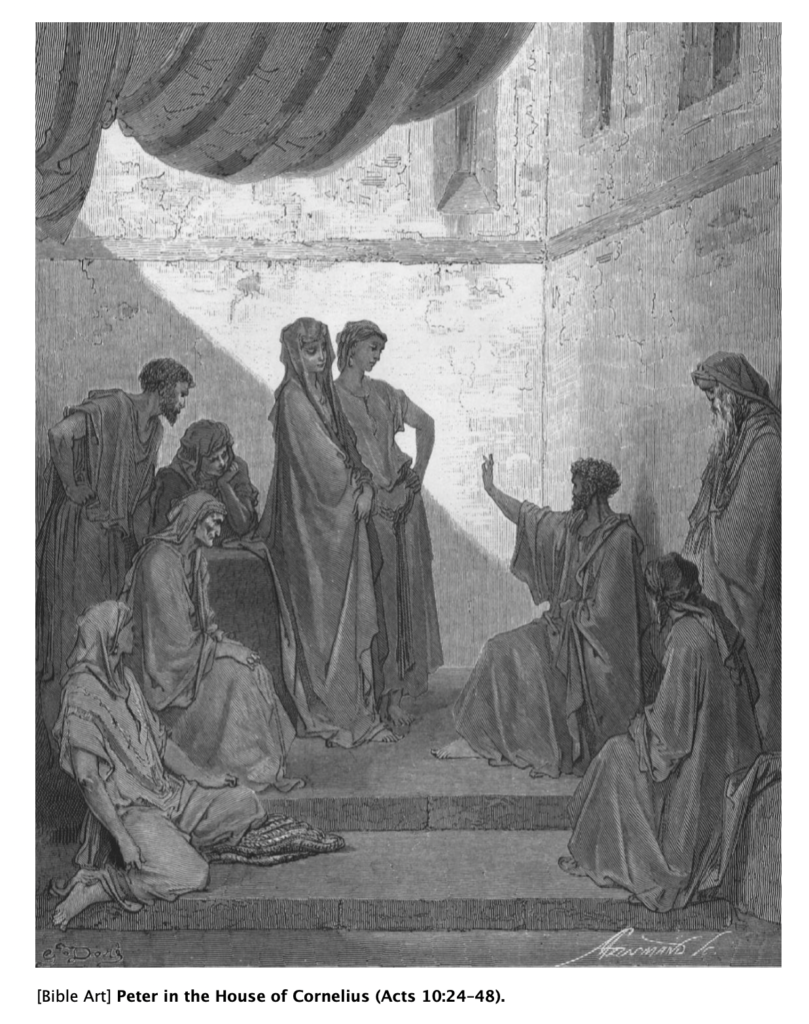
Let’s return to the major question we are considering in this final section.
We are asking whether Paul defined the New Testament congregation as the New Israel. Those who hold to a replacement theology maintain that Shaul spells out his framework in greater detail in his letters to various messianic congregations. That expectation is completely acceptable, though questionable.
We would expect to find the replacement-theology perspective a constant thread throughout the letters in which the Apostle defines this newly formed congregation of messianic believers.
Therefore, it’s a fair question to ask: In a letter in which Paul spends much time defining the NT community, does he describe this newly thriving group of Yeshua followers as the “new Israel”?
In a well-written chapter in Benjamin I. Merkle’s book United to Christ: Walking in the Spirit (Crossway), the author focuses on how believers are united together in the New Testament body through their mutual trust in the Messiah.
Merkle lists the metaphors Saul uses in Ephesians to communicate this new reality for followers of Yeshua: Body, Temple, Church, and building. The major texts the writer uses to bolster this communal reality are Ephesians 2:14-22 and 4:1-16.
Of course, there are other passages employed in the B’rit Hadashah (New Covenant) that convey the same content. However, examining all the NT passages relevant to our discussion is beyond the scope of this article.
In Saul’s instructions regarding the community of believers, we are asking whether this major New Covenant writer designates messianic believers, Jews, and Gentiles as the “new Israel.”
The Body Metaphor of the New Covenant Community
In Ephesians 2:16, Paul uses the BODY MΕΤΑPHOR to describe the community of believers, or the Church (ekklesia). The text states, “and might reconcile us both to God in one Body through the cross . . . (2:16 ESV, bold formatting mine). In the New Covenant, Jewish and Gentile believers are together in a relationship of reconciliation through faith in Yeshua.
As one can read, this newly created community is clearly identified as the “body” of believers in the New Covenant scriptures, not a “new Israel”. In fact, the Greek Old Testament (LXX) uses the Greek word for “body” (σάρξ) seventy-two times. Yet, the Jewish writers of the LXX fail to use this word as a metaphor to describe the nation of Israel.
There are a few more references to the Body of Messiah in Ephesians. The body metaphor is applied to the community of Jewish and Gentile believers in Ephesians 4:4, 11-12, and 15-16. Each of these citations refers to the ekklesia, or Church of God. In Ephesians 4:4-6, Paul discusses the importance of the unity of all believers. He provides a series of markers of oneness, but to head the list, he writes, “there is one Body and one Spirit “(Ephesians 4:4 ESV). The unity of the Body of believers provides all the evidence necessary to demonstrate the oneness of believers. In all these examples of the unity of the Body, Paul does not refer to Israel, physical or spiritual.
The Household Metaphor of the New Covenant Community
Paul moves from the metaphor of the Body of the Messiah to a building symbol as seen in Ephesians 2:19-22:
So then you are no longer strangers and aliens, but you are fellow citizens with the saints and members of the household of God, built on the foundation of the apostles and prophets, Christ Jesus himself being the cornerstone, in whom the whole structure, being joined together, grows into a holy temple in the Lord. In him you also are being built together into a dwelling place for God by the Spirit (Ephesians 2:19-22 ESV) (bold formatting and italics mine).

Notice the terminology used by the writer in chapter 2, verses 19-22: household of God, a holy temple, a dwelling place.
As Paul focuses on the reconciliation of Jews and Gentiles, he is quick to depict the fact that God includes Gentiles in the people of God. He describes Gentile members of this new messianic community as “fellow citizens,” “members of the household of God,” “a structure” that grows into a “holy temple” (2:21) and a “dwelling place” for the Spirit of God (2:22). The absence of the term “spiritual Israel” to describe this structure that now includes Gentiles is striking.
In a context where Paul pinpoints the new relationship Gentiles have with their fellow Jewish believers, he fails ever to call this community “I” rael,” “he “n” w Israel,” “r a “s” iritual Israel.”
The One New Man Metaphor of the New Covenant Community
In Ephesians 2:15, Paul speaks of the ekklesia as the “one new man.” In this passage, the Apostle includes Jewish and Gentile followers of Yeshua in the “one new man.” Paul had a perfect opportunity to call this reconciled community the “new Israel.” Merkle clarifies, “. . Jew and Gentile are incorporated into Messiah, becoming consolidated into one new entity . . . Jews and Gentiles are now reconciled and incorporated into the Church, the Body of Messiah” (Merkle, pg. 58).
Let’s sum up the flow of thought thus far. Rabbi Shaul is provided one opportunity after another in his writings to push the “new Israel” doctrine. Yet, the major architect of messianic theology fails to nail down any hint of this so-called “revised Israel.”
The Head of the Body Metaphor of the New Covenant Community
In Ephesians 4:15-16, the Apostle emphasizes that Yeshua is the head of the Body and from Him flows the life of the Body. Ultimately, it is the Messiah who builds the Body. As has already been demonstrated, the Body of Messiah is the “Church.”
Eph. 4:15
But speaking the truth in love, we must grow up in every way into him who is the head, into Messiah,
Eph. 4:16
from whom the whole body, joined and knit together by every ligament with which it is equipped, as each part is working properly, promotes the body’s growth in building itself up in love (Ephesians 4:15-16 NRSV, bold formatting mine).
Let me add one more supportive passage from Colossians 1:18, “And the Head of the Body, the church” (Colossians 1:18 ESV, bold formatting author’s).
Let me point out one final quagmire that replacement theology devotees put themselves in. Yeshua stated in Matthew 16:18:
And I tell you, you are Peter, and on this rock I will build my church [ekklesia], and the gates of hell shall not prevail against it. (ESV, bold formatting mine).
Yeshua is clear that He will build the Church in the future.
Israel already existed when Jesus spoke these words. If, according to Replacement theologians, Israel is the Church, why would Yeshua state that He will build a Church?
Shouldn’t He have been clearer on such a weighty issue? Why would He leave it up to others to figure out this cryptic reference?
This incoherent mixing of spiritual truths about Israel and the Body of Messiah by advocates of Replacement theology creates a conundrum of theological confusion never intended by the NT writers.
Conclusion
The advocates of Replacement Theology have to ask themselves, “What took place on the Day of Pentecost (Shavuot)? Was the NT church born for the first time on that occasion in accordance with Matthew 16:18?
Perhaps Pentecost was merely an event in which God transformed the spiritual remnant within physical Israel into a spiritual Israel. This new entity came to be known as “the Church.” Thus, to these advocates of replacement theology, Yeshua did not actually BUILD A NEW EKKLESIA on that day? Did He?
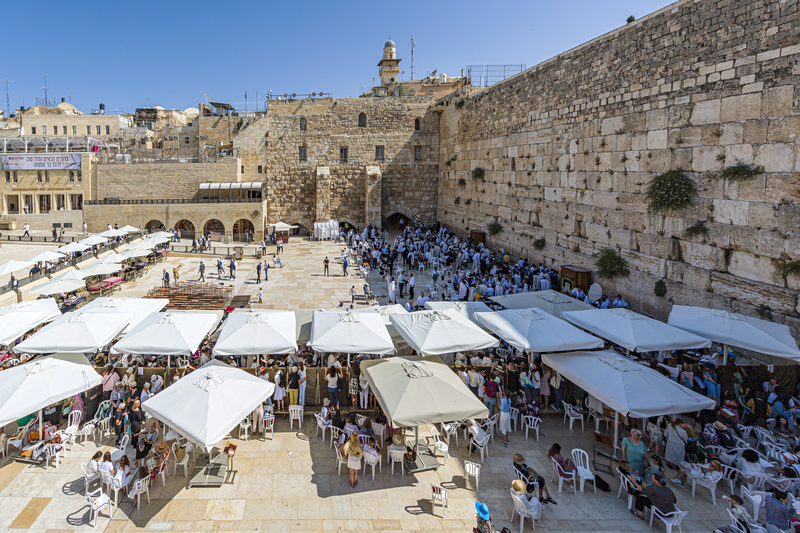
Let me explain more about the Jewish remnant. In the Jewish Scriptures, a spiritual remnant within the nation of Israel always existed. (Isaiah 10:20-22; 11:11).
In the New Covenant, a spiritual remnant of Jewish people was also present. I’m thinking about an example like Simeon, a righteous Israelite who was waiting for God to fulfill the messianic promises of the Hebrew prophets: “Now there was a man in Jerusalem, whose name was Simeon, and this man was righteous and devout, waiting for the consolation of Israel, and the Holy Spirit was upon him (Luke 2:25 ESV)
In addition, Rabbi Shaul mentions the existence of a remnant of messianic Jewish believers in Yeshua within the Body of believers: “So too at the present time there is a remnant, chosen by grace” (Romans 11:5 ESV, bold formatting mine).
This token of Jewish believers existed within the Body of Messiah along with Gentile believers within the New Covenant church: “This mystery is that the Gentiles are fellow heirs, members of the same body . . . (Ephesians 3:6 ESV; see also Colossians 1:18, bold formatting mine).
We must ask, “What body are Gentiles a part of? Israel or the Church?”
The answer? Gentiles who are disciples of the Jewish Messiah are incorporated into the Church, not a spiritual Israel, along with Jewish worshippers. The proponent of replacement thinking must look hard to find a passage in the Greek Scriptures that states Jewish and Gentile members of the messianic community are now part of a new Israel.
Only messianic Jewish believers have a connection to both the national and spiritual Israel. Messianic Jews are the present-day “spiritual Israel” who have circumcised hearts (Deuteronomy 30:6) and are spiritually born from above (John 3:5). However, this spiritual remnant of Jewish believers exists WITHIN the Body of Messiah. Still, we do not comprise the ENTIRE Body of believers.
I must inquire again: Where is the evidence of the Jewish remnant of messianic believers becoming the Church or a “new Israel” into which Gentiles become a part of?
We’ve seen over and over in this post that the New Covenant scriptures do NOT portray non-believing Jewish people as members of a “phantom Israel.” Neither do we find Gentile Christians in the New Covenant referring to themselves as “spiritual Jews.”
As I survey writers with an RT bent, most of the evidence for the alleged “new Israel” thinking rests on inference and nuances in the biblical text.
In further upcoming articles, I will touch upon these suspect statements that fail to support the fact that the Church is the “new Israel.”
My friends and family know I am an avid follower of Major League Baseball. From April, when the MLB season begins, through the World Series in October, I am glued to the TV or my iPad, fixated on baseball action.
One of the options in a baseball game is a pinch hitter or runner. Baseball rules allow a manager to replace an upcoming batter or baserunner with another hitter or runner. That substitute player comes into the game to substitute for a weaker batter or a slow baserunner.

Hopefully, the pinch hitter will get on base or advance another player on base to another base. A pinch runner might even steal a base to place himself in a better position to score a run.
Unlike baseball, followers of Yeshua are NOT spiritual pinch batters or baserunners on Israel’s team. It is true that Israel, as a nation, did not embrace Yeshua. However, people who have accepted Yeshua do not replace Israel’s players, hoping to prove to be better athletes and become a much-improved team.
Rather, God has created a totally new team: the Body of Messiah. Currently, the Body of Messiah serves as God’s tool to bring His message of redemption to others. Again, the Church is NOT a substitute team of replacements for Israel. They are a distinct team, not members of Team Israel with newer players.
At the same time, God plans to continue to work with His team, Israel. Eventually, Team Israel will receive a “new manager”-Yeshua, the Messiah of Israel. The time will come, hopefully soon, when Team Israel will walk in all the blessings God intended for His chosen nation.
Now if their [Israel] transgression means riches for the world and their defeat means riches for the Gentiles, how much more will their full restoration bring? (Romans 11:12 NET-1ST)
But as regards election, they [Israel] are beloved for the sake of their forefathers. For the gifts and the calling of God are irrevocable. (Romans 11:28-29 ESV).




Leave a Reply