Christians frequently ask me why Jewish people struggle with the image of a cross. My response is always the same, “It’s the history attached to the cross that gives Jewish people a reason to eschew this symbol sacred to Christians.” Who is responsible for this theological war waged on the New Covenant significance of the cross?
In the past 200 years, Christians have shouldered the sign of the cross in their wars on so-called infidels. Even today, followers of Jesus brandish the cross at political events. Onlookers are led to believe the Christian message is in full support of various civic causes-good and bad-when the cross is displayed at these protests.
Hence, there has been a war on the cross in ancient Christian history. This same confusion regarding the biblical significance of the cross is apparent when evangelicals glue the cross symbol to contemporary secular political aspirations.
To elaborate on this pressing question uttered by Jewish people, I authored an article in 2016. I used the subtitle “The Roots of the Problem of the Cross in the Eyes of Jewish People.”
In this short piece, l focused on the torrid history of the medieval Crusades. Recently I revised this composition and added additional insights.
In this revised article, I am mostly concerned with several parallels of the Crusader mentality leaking into modern evangelical Christianity’s political stance. The imagery of the cross as the vehicle of God’s spiritual redemption is distorted by a cadre of Christians. Sadly, these actions confuse many Jewish and non-Jewish people.
The Cross Appears Where It Should Not Be
For the past 5-6 years, the cross symbol has appeared at political rallies as a Christian stamp of approval of an event, a candidate, or a political ideology. Zealous Christians are hijacking the cross imagery for their purposes. In their patriotic fervor, the protestors seem unaware of the military stigmas attached to the cross from the Crusaders.
For example, at the January 6 insurrection at the Capitol Building, both peaceful and militant evangelicals wielded the cross as they protested the national vote that elected Joe Biden as president. From a well-researched article on Christian nationalism from the Joint Baptist Committee, we learn:
One of the most ubiquitous symbols on January 6 was the Christian cross. Latin crosses are “the principal symbol of Christianity around the world,” according to the Supreme Court, and, as used on January 6 by the insurrectionists, one of the clearest displays of Christian nationalism.
Sword & shield with light-painting illumination
They [participants at January 6 event] erected an 8-foot wooden cross in Freedom Plaza (at the White House end of Pennsylvania Avenue) and another 8-foot tall cross at the Capitol that became disturbingly iconic after the crowd prayed around it
The Cross is Used to Send a Message It Should Not Give
I embrace the American freedom to express one’s political views. Nonetheless, I am stunned at how the flagrant use of the biblical symbol of divine pardon is thoughtlessly attached to extreme right-wing politics. For further information on the appearance of Christian symbolism at the January 6 event, click here.
How can the redemptive symbol of Christianity be conjoined with any form of partisan politics? Does any political group possess the authority to utilize the crucifix icon to support their cause?
The way I see it, when a political faction adopts the image of the cross in connection with their viewpoint, this action implies their perspective is THE authoritative Christian way of thinking. The message is clear: Any faithful follower of Yeshua (Jesus) will and should back any ideology that commanders the cross to bolster their outlook.
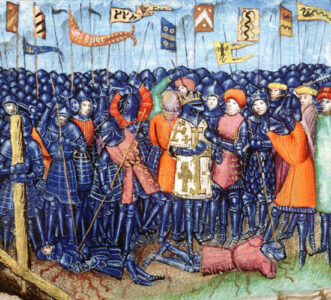
This misuse of the cross to support a secular political effort is reminiscent of the militant Crusaders who affixed the cross to their shields as they rampaged across Western Europe.
Need I say modern evangelical patriots are NOT determined to harm anyone as the Crusaders did. Nevertheless, when the cross is displayed at an event where government property is destroyed, attacks on law enforcement personnel take place, and anger is unleashed on dissenters, how is the redemption promise of the Messiah communicated?
My title, “The War on the Cross,” describes how the misuse of the cross by followers of the crucified Messiah clouds our salvation declaration. Rather than zero in on those who reject the good news of salvation, believers in Jesus need to discern how we can be the ones making war on the message of the death of the Suffering Servant.
I could not contain my excitement when I entered Bible College in Dallas, Texas in 1971. I looked forward to learning New Testament Greek, studying the Jewish Scriptures and the New Testament, and researching multiple schools of theology. Attending Bible College was a dream come true. And it was, for the most part.
I devoured every class offered in Bible and theology. I signed up for Leviticus and Hebrews to better understand the connection between the Hebrew Scriptures and the New Covenant.
Hermeneutics or Biblical Interpretation was one of many required courses. My professor was a graduate of the Dallas Theological Seminary (DTS). Yet, he took pride he had rejected the dispensational theology he learned at DTS. In other words, he became a replacement theologian. He did not affirm God has a plan for the nation of Israel other than the need for individual Jewish people to accept Yeshua.
As the professor unraveled his theology in class one afternoon, he proudly announced he is a spiritual Jew. In fact, in an arrogant tone, he declared he was a “true Jew.” I almost fell out of my chair. I did not believe my ears.
According to the teacher, God wiped His hands of the nation of Israel. Presently, the Lord formed a “new nation of Israel” made up of Gentiles removed from Jewish tradition and culture.
Photo courtesy of Photo by Raimond Klavins from Unsplash
According to my professor, God has no interest in the physical land of Israel or in preserving the Jewish nation as He promised to Abraham. All the references to the land and the Jewish nation in Scripture are realized in the Church. I was nauseous. I wanted to bolt from the classroom.
I ended up in my car after class, trembling and shaking. Questions bombarded my brain. Was God lying to Abraham about the Jewish nation to issue from his loins? Can God be trusted not to give mixed messages in His promises? Do my Gentile brothers in the Lord truly know what is contained in the Jewish Scriptures? What does replacement theology do with the many prophecies that guarantee the nation of Israel possession of the land forever? Was I in the wrong faith? How could I look at these Texas Christians and think of them as Jewish?
Why do I share this story? Truly, my encounter with this professor who espoused Replacement theology set me on a lifetime journey of disproving this teaching that is harmful to a proper understanding of God’s commitment to Israel. Hence, I have undertaken this series of articles on the use of Matthew 5:5 or the third beatitude by replacement theology advocates to remove Israel from the proper focus of God’s eternal plan for His cherished people.
Since Yeshua quoted Psalm 37:11 in Matthew 5:5, the Bible student must grasp the context of this Psalm to comprehend how Jesus was using this passage. In the last article, we looked at five themes of Psalm 37. Now we will dig into the passage itself as it leads up to verse 11, “But the meek shall inherit the land and delight themselves in abundant peace” (ESV).
Was Jesus removing the land of Israel promised to the Jewish people and handing it off to the “meek”? Of course, the meek, according to RT, refers to Christians. However, since followers of Jesus are a spiritual people whose citizenship is in heaven, the “land,” according to RT, now refers to heaven, not the geographical strip of land in the Middle East adjacent to the Mediterranean Sea.
After studying ReplacementTheology since 1971, I have concluded this is not a study of an impractical issue but a defense of the truthfulness of God’s character. Can His word be trusted? My concern in every article I have written and every sermon I taught on this subject is the veracity of God’s character and His word in light of the shadow cast by RT on the Church. This same burden drives my passion for writing this series of articles.
Jul 30, 2021
Posted by Scripture Solutions on Jul 30, 2021 | Comments Off on Did Jesus Give Away the Land of Israel to Christians? (Matthew 5:5) Part 2
Photo courtesy of Photo by Raimond Klavins from Unsplash
Introduction
It is next to impossible to not know what the heartfelt cry, “Stop the Steal” refers to. In the aftermath of the November 3, 2020 presidential race, there are a great number of Trump supporters who believe the election was stolen; thus the declared winner of that contest, Joe Biden is an illegitimate president.
AP Photo/Jose Luis Magana
Along with the questionable belief that the election victory of former President Dοnald Trump was pilfered from the former POTUS, we find various conspiratorial assumptions fermenting among a select segment of his support base. According to some conspiracy subscribers, as reported by Joel Lawrence from Center for Pastor Theologians, God has promised to give President Trump another four years in the White House and the “Deep State” has been working to thwart the will of the Lord (“Faith, Apocalypse, and Nationalism: Why Evangelicals are Vulnerable to Conspiracy Theories”, Center for Pastor Theologians, 01/25/2021).
From these alleged concerns comes the cry, “Stop the Steal!” In the January 6th insurrection of our nation’s capital, we heard the cry repeatedly among those who stormed our nation’s treasured buildings and from those who protested “peacefully” outside. Joel Lawrence traces some of the roots that led to the “Stop the Steal” protest:
According to the Presidential narrative, this vast conspiracy involved Hugo Chavez, Dominion voting machines, Republican governors and Secretaries of State, Democratic poll workers in largely African American cities, Antifa, and countless others. These theories thrived in an environment of conspiracy, eventually leading to an attack on the United States Capitol, in which five people lost their lives and the safety of legislators were threatened.
“Faith, Apocalypse, and Nationalism: Why Evangelicals are Vulnerable to Conspiracy Theories”, Center for Pastor Theologians, 01/25/2021
The important takeaway is that President Trump, along with an extensive team of lawyers and advisors claimed without evidence in court, the 2020 vote for the president was rigged. Despite the data to the contrary, a majority of Trump supporters still aggressively believe the election was poached from the 45th president.
The steal of the identity of the nation of Israel
This author does not hesitate to apply the term “steal” to the teaching among conservative replacement theologians who profess the nation of Israel has been replaced by the church. Essentially, Replacement Theology(RT) maintains the Church or even Jesus is the “new Israel”.
If Jesus or the Church is the “new” Israel, God’s chosen nation has been replaced by a greater spiritual reality. Therefore, the status of Israel is reduced from a people who are the “elect of God” to a community “abandoned by God” when it comes to His national promises to the Jewish people. If this teaching is not true, then these academics, pastors and theologians are guilty of stealing the rightful God-given identity of Israel and misapplying this divine status to the Church.
The root of this thinking is the misunderstanding of the election of Israel. The chosen status of the Jewish people has been misread by the Jewish nation’s detractors and supporters in several ways:
1) Many believe chosenness implies the Jewish people are superior to other peoples. Since ethnic or racial superiority is contrary to biblical truth, the Jewish people have disqualified themselves to be divine representatives on earth. This responsibility, according to RT advocates has been transferred over to the Church. This erroneous impression of Israel’s runaway self-importance and superiority is absent from traditional Jewish teaching. if anything, God’s election of Israel calls for the nation to have a greater moral and spiritual responsibility before God and man.
2) Others wrongly maintain Israel’s election grants divine approval of all Israel’s decisions and actions when it comes to the Palestinians. A simple perusing of Israel’s 73-year history demonstrates the nation’s constant examination of its relationship with the Palestinians. On several occasions, Israelis have taken to the streets in protest of the IDF’s actions towards their Arab neighbors. The Jewish nation displays little evidence their concept of chosenness provides them a free pass when it comes to unfair treatment towards those who oppose the establishment of the Jewish state. Once again, anti-Israel evangelicals are grossly mistaken to try to belittle Israel’s elect status because of the Jewish state’s perceived or actual mistreatment of other peoples. When necessary, Israel has proven time after time its willingness for self-examination and self-correction in regards to the Palestinian people.
3) Israel’s election, according to some Christian Zionists, is an alternative for Jewish people needing to believe in the Messiah Yeshua. Christian Zionists who hold to this viewpoint believe are truly supportive of Israel. Yet they are not true to the divine plan for the Jewish nation which includes accepting Yeshua as the promised Messiah. Backing the nation of Israel by Christian Zionists is greatly appreciated by the Jewish nation. However, these well-meaning Christians are pilfering from Israel the blessing of finding redemption in Yeshua.
Due to this fallacious grasp of the election of Israel, many evangelical theologians are susceptible to eliminating Israel from God’s eternal plan for the nation. One of the ways this depreciation pans out is through the teaching Israel has been replaced by the triumphant Church that DID accept Yeshua as Messiah. I often wonder if we applied these same tests of moral superiority and unchecked behavior to evangelicals, how well our elect status would hold together? Church history-both ancient and modern-is filled with numerous occasions when the Church has behaved in ways that betrayed its elect status. Yet to select evangelical scholars, the moral test only applies to Israel.
in contrast, the Apostle Paul warns Gentile Christians, “do not be arrogant toward the branches. If you are, remember it is not you who support the root, but the root that supports you. Then you will say, “Branches were broken off so that I might be grafted in.”That is true. They were broken off because of their unbelief, but you stand fast through faith. So do not become proud, but fear.For if God did not spare the natural branches, neither will he spare you” (Romans 11:18–21 ESV).
The steal of the land once promised to the people of Israel
RT advocates the Old Testament land promises no longer describe a geographical space. The nation Israel failed to enter into the physical and spiritual rest to be found in the Promised Land. Presently the land promises have been overhauled. These Christian academics teach the spiritual rest Israel was to experience in the physical land of Israel can now be encountered in the promised spiritual rest in Jesus minus the possession of the land. Some Christian thinkers have added the land of Israel was merely a shadow of the ultimate eternal rest experienced in heaven or in Yeshua.
In the opinion of this author, the belief system of Replacement Theology is a “steal” of Israel’s rightful place in biblical theology. Once God made time-tested promises to Israel regarding a people, a land and a channel for blessing to others. Now these promises have been reinterpreted and confiscated from the Jewish people by replacement theologians.
Louis Lapides
Thus, the geographical promise of the land of Israel made to the Jewish nation has been transformed into a spiritualized improvement. The spiritual rest in the Son of God appeals especially to those evangelicals who have bought into a Gnostic dualism in which the material world is inferior to the transcendent reality of heaven. If the material land promises now refer to Jesus or heaven or the Church, then the Old Testament promises to the Jewish people are null and void or unnecessary. We now have the greater spiritual reality that the land promised to Abraham pointed to.
This present series of articles focuses on the use of the third beatitude to disparage God’s promises of the land to Israel. The misapplication of the third beatitude is a prime example of how RT theologians have no qualms about deploying New Testament passages to support their theological system that supplants or steals God’s blessings from the nation of Israel.
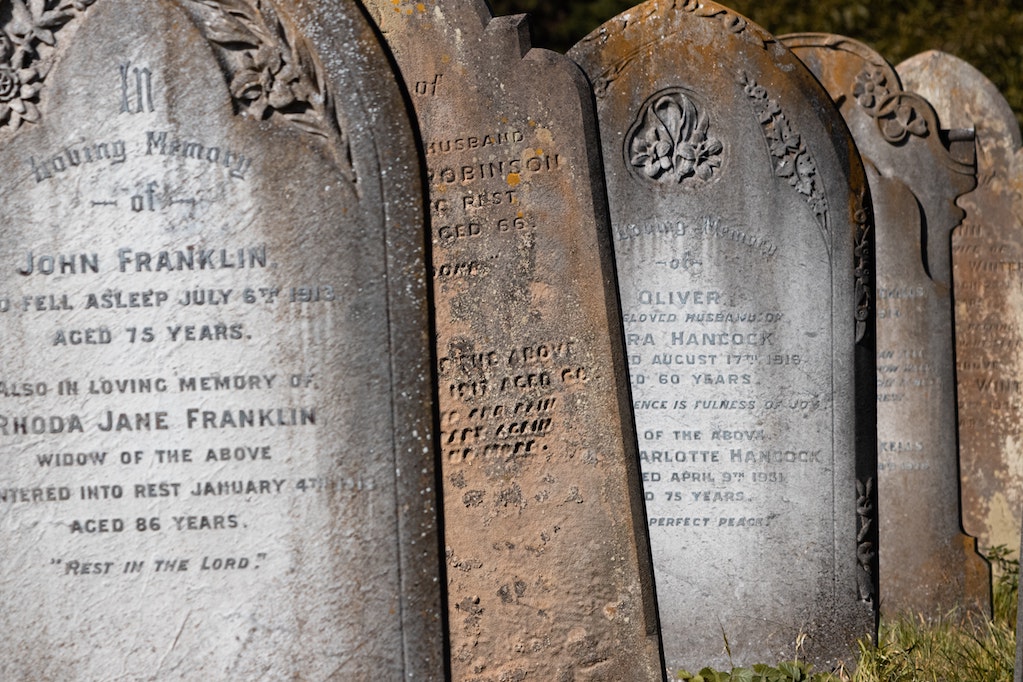
My parents both passed away within the last decade. They are buried in a Jewish cemetery in North Lauderdale, Florida. Whenever I am in the Sunshine State, I make every effort to show my respect and visit their gravesites.
I find it a bewildering experience to observe the engravings on the grave stones in this memorial park. Some headstones illustrate that the departed were avid gamblers. On their markers are carved images of dice, playing cards, roulette wheels and cocktail glasses. The only thing missing is whether after thirty years of gambling, they came out ahead or died with a heavy debt.
Why would someone who lived for almost a century desire to be known for their gambling passion? What kind of legacy are they passing on to their loved ones?
In this article we look at Noah, a man who left us a legacy of faithfulness to God in the midst of an impending worldwide disaster. He has many descriptions written about him in Scripture that chronicle how he handled the universal crisis that confronted him. Any one of these statements could have been written on his tombstone: a man who “found favor in the eyes of the LORD (Genesis 6:8); “a righteous man, blameless in his generation . . . walked with God” (Genesis 6:9); “an heir of the righteousness that comes by faith” (Hebrews 11:7) and a “herald of righteousness” (2 Peter 2:5).
Noah left us an example of how we can conduct ourselves when life does not meet our expectations. Yes, there are vast differences between ourselves and Noah that impede us from drawing an exact parallel. Yet there are some spiritual attitudes possessed by this patriarch that can help us during the current COVID-19 crisis of crippling economic deprivation, extreme health hazards and separation from loved ones.
Summers in the East Coast were often a treat for me as a young boy. I treasured spending those hot, humid days visiting my grandparents in Coney Island in New York. Besides cooling off in the Atlantic Ocean, the main attraction was Steeplechase Park. The assortment of rides this park offered to a young starry-eyed boy was dizzying. Of course, I was ambitious enough to think I could enjoy them all in one outing.
One go-to amusement was the swing ride. According to an online history of carousels, the “swing ride is a variant of a carousel ride – a fairground ride that has chairs suspended by chains from the top of the carousel . . . This ride is also called a swing carousel, wave swinger, yo-yo, Chair-O-Planes or a swinger”.
This mechanism operates on a principle of a spinning central core powered by a motor that forces the swings to extend outward on wires or metal chains. The faster the central core spins, the farther out the swings stretch.
What does this sentimental childhood memory have to do with Noah’s situation or any spiritual truths? Let me suggest our relationship with God begins with a person’s central core fixed on the Lord. From this connection to our Creator, we discover a powerful, inner centrifugal force that drives our spiritual aspirations. When that inner connection to God is fractured, there are grave spiritual consequences-lack of purpose, extreme self-centeredness, depression, broken relationships, and involvement in destructive sins. This truth brings us to the reason why God brought the Flood upon our planet.
Sadly, this catastrophic event in Noah’s day was due to man’s lack of any desire to enjoy a relationship with God. The human population refused to see their need to have God as that centrifugal force. Instead, they attempted to enthrone themselves at the core of their souls. We too are fooled by the same self-deception. As long as we keep the swings in motion, we are convinced we can be the “captain of our own souls.” Despite our sincere endeavors, we default to arrogant pride, extreme self-centeredness, and a refusal to believe there is Someone in the universe greater than ourselves.
From this breakdown in man’s bridge to God in Noah’s day, humanity spiraled out of control. The downward thrust of mankind was enough for God to respond with a promise of a worldwide Flood. Like the motion of the carousel swing ride from the central core, our trouble is due to a failure to see the need to allow God to become part of our energizing inner core.
A study from the Reuters Institute for the Study of Journalism asked thousands of people what news was most important to them. International news beat out celebrity and “fun” news by a margin of two-to-one. Economic and political news finished even higher. But what happens when readers were asked not what’s important, but what they actually read?
Derek Thompson with The Atlantic claims most Americans lie about what they actually read. He explains: [On June 17, 2014], the most important story in the world, according to every major American newspaper this morning, is the violent splintering of Iraq.
So what did we actually read on June 17, 2014? The top stories across the big media outlets focused on the World Cup, a YouTube game, gluten and postpartum depression, the Miss America Pageant, and the Video Music Awards. Thompson concludes, “Ask audiences what they want, and they’ll tell you vegetables. Watch them quietly, and they’ll mostly eat candy.”
If we are truthful about ourselves, we discover we are rather dishonest. Consequently, we wouldn’t par too well if we were asked to submit to a spiritual fitness test based on a thorough self-examination of our inner truthfulness. We tend to overestimate our goodness and underestimate how much we need to repent and grow.
In Proverbs 16:2 Solomon beckons us to sign up for an investigation of our inner lives lest we be scammed by a dishonest heart. (more…)
Aug 5, 2016
Posted by Scripture Solutions on Aug 5, 2016 | Comments Off on The Hunt for the White Whale of Anger
Recently I completed reading Herman Melville’s Moby Dick. The novel tells a story of revenge and obsession. Captain Ahab, a whaler, loses a leg to a white sperm whale. A smoldering anger begins to grow in the one-legged captain.
Captain Ahab’s anger grows into a fixation on revenge against the sea monster. As his hatred grows, so does his lack of wisdom. On his final whale-hunting trip, the driving force in his soul begins to override good judgment, putting the man, the crew, and his ship into hazardous situations.
As the captain hurls his ship, the Pequod, into the perilous seas of hate, his opportunity to take vengeance finally arrives. The white whale is within Ahab’s grasp. His desire for revenge grows deeper, ignoring every danger. In the end, the ship is lost, the crew is lost, and Ahab loses both his quest and his life. The white whale has won.
In Proverbs 15:18, King Solomon once again acknowledges the power of unharnessed anger. In Proverbs 15:1, Solomon previously addressed the power of anger and the response of the person on the receiving end, “A gentle answer turns away wrath . . . ” (15:1). However, in verse 18, his advice for removing the harpoon out of the hands of an angry person takes a different turn.
In response to my article on Proverbs 15:1, one reader commented the advice of Solomon is unworkable. A fair question. Face it, we all have tried to cool down a heated argument with a calm response, but the flames rose higher regardless.
Is there something we can do to convince an angry individual to drop his sharpened missile?
For individuals reared in a home of discord, an environment of bickering and contention has become a family tradition.
A young rabbi faced a serious problem in his congregation. During erev Shabbat service, half the congregation stood for the prayers and the other half remained seated, and each side shouted at the other, insisting theirs was the true tradition.
Nothing the rabbi said or did helped solve the impasse. Finally, in desperation, the young rabbi sought out the synagogue’s 99-year-old founder. He met the old rabbi and poured out his heart. “So,” he pleaded, “was it the tradition for the congregation to stand during the prayers?”
“No,” answered the old rabbi. “Then it was the tradition to sit during the prayers,” responded the younger man. “No,” answered the old rabbi. “Well,” the young rabbi answered, “what we have now is complete chaos! Half the people stand and shout and the other half sit and scream.”
“Ah,” said the old rabbi, “that was the tradition.”
In Proverbs 15:1 Solomon, king of the nation of Israel, demonstrates his awareness of angry conflicts that boil over into our homes. The solution offered by the wise king is not for us to ignore angry words. Rather, he tells us returning harsh words with harsher words is non-productive and can heat up our relationships like a hot air balloon.
As we look at Proverbs 15:1 we are given an “out of the box” way of reacting to potentially heated exchanges and defusing a situation to open a door for God to bring His peace. (more…)
The question of forgiving one another has plagued me ever since I became a follower of Jesus. I heard many pastors and Bible teachers comment on this subject, but I did not feel they were teaching the message of the biblical text. Instead, what I was hearing was helpful common sense advice and psychological healthy ways to look at the way we should forgive one another.
Recently a good friend of mine whom I deeply respect, challenged me on my beliefs regarding the need for repentance as a condition for forgiveness.
Where I agree on this issue with my friend is that we both are in harmony that for a person to be reconciled with God, there must be a display of contriteness or repentance to experience the eternal forgiveness of God. This is designated “vertical forgiveness” because it takes place between man and God.
Forgive One Another
Where my friend and I disagree is whether or not repentance is necessary when we as humans forgive one another. If I offend another person, do I need to go to that person or have that person come to me so that I can confess my sin, state my intention to repent and ask for that person’s forgiveness?
My friend’s viewpoint is that we can forgive the other person through the forgiveness Jesus obtained for us through His death on the cross. The grace of God shown in the sacrificial death of Yeshua on the cross should so overwhelm us, that the natural outflow of our awe towards God’s love is to forgive others because God has shown His merciful forgiveness to us through His Son.
There is not always the need for repentance when there is “vertical forgiveness.” On the basis of the atonement we have in the Messiah, we forgive one another. with or without any display of repentance. In the Sermon on the Mount, in the Lord’s prayer in Matthew 6:12, we read, “And forgive us our debts, as we also have forgiven our debtors (NIV). (more…)










 every major American newspaper this morning, is the violent splintering of Iraq.