Christians frequently ask me why Jewish people struggle with the image of a cross. My response is always the same, “It’s the history attached to the cross that gives Jewish people a reason to eschew this symbol sacred to Christians.” Who is responsible for this theological war waged on the New Covenant significance of the cross?
In the past 200 years, Christians have shouldered the sign of the cross in their wars on so-called infidels. Even today, followers of Jesus brandish the cross at political events. Onlookers are led to believe the Christian message is in full support of various civic causes-good and bad-when the cross is displayed at these protests.
Hence, there has been a war on the cross in ancient Christian history. This same confusion regarding the biblical significance of the cross is apparent when evangelicals glue the cross symbol to contemporary secular political aspirations.
To elaborate on this pressing question uttered by Jewish people, I authored an article in 2016. I used the subtitle “The Roots of the Problem of the Cross in the Eyes of Jewish People.”
In this short piece, l focused on the torrid history of the medieval Crusades. Recently I revised this composition and added additional insights.
In this revised article, I am mostly concerned with several parallels of the Crusader mentality leaking into modern evangelical Christianity’s political stance. The imagery of the cross as the vehicle of God’s spiritual redemption is distorted by a cadre of Christians. Sadly, these actions confuse many Jewish and non-Jewish people.
The Cross Appears Where It Should Not Be
For the past 5-6 years, the cross symbol has appeared at political rallies as a Christian stamp of approval of an event, a candidate, or a political ideology. Zealous Christians are hijacking the cross imagery for their purposes. In their patriotic fervor, the protestors seem unaware of the military stigmas attached to the cross from the Crusaders.
For example, at the January 6 insurrection at the Capitol Building, both peaceful and militant evangelicals wielded the cross as they protested the national vote that elected Joe Biden as president. From a well-researched article on Christian nationalism from the Joint Baptist Committee, we learn:
One of the most ubiquitous symbols on January 6 was the Christian cross. Latin crosses are “the principal symbol of Christianity around the world,” according to the Supreme Court, and, as used on January 6 by the insurrectionists, one of the clearest displays of Christian nationalism.
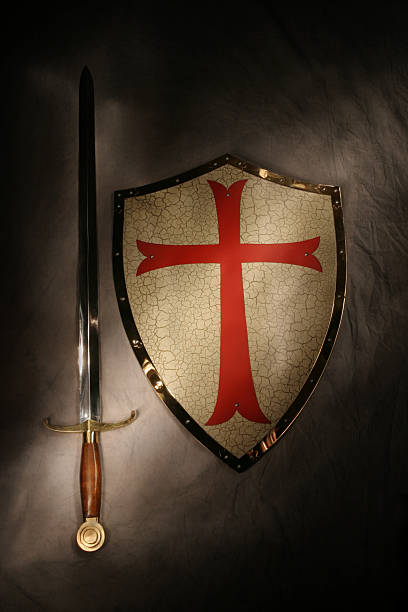
Sword & shield with light-painting illumination
They [participants at January 6 event] erected an 8-foot wooden cross in Freedom Plaza (at the White House end of Pennsylvania Avenue) and another 8-foot tall cross at the Capitol that became disturbingly iconic after the crowd prayed around it
The Cross is Used to Send a Message It Should Not Give
I embrace the American freedom to express one’s political views. Nonetheless, I am stunned at how the flagrant use of the biblical symbol of divine pardon is thoughtlessly attached to extreme right-wing politics. For further information on the appearance of Christian symbolism at the January 6 event, click here.
How can the redemptive symbol of Christianity be conjoined with any form of partisan politics? Does any political group possess the authority to utilize the crucifix icon to support their cause?
The way I see it, when a political faction adopts the image of the cross in connection with their viewpoint, this action implies their perspective is THE authoritative Christian way of thinking. The message is clear: Any faithful follower of Yeshua (Jesus) will and should back any ideology that commanders the cross to bolster their outlook.
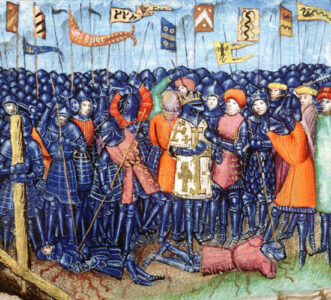
This misuse of the cross to support a secular political effort is reminiscent of the militant Crusaders who affixed the cross to their shields as they rampaged across Western Europe.
Need I say modern evangelical patriots are NOT determined to harm anyone as the Crusaders did. Nevertheless, when the cross is displayed at an event where government property is destroyed, attacks on law enforcement personnel take place, and anger is unleashed on dissenters, how is the redemption promise of the Messiah communicated?
My title, “The War on the Cross,” describes how the misuse of the cross by followers of the crucified Messiah clouds our salvation declaration. Rather than zero in on those who reject the good news of salvation, believers in Jesus need to discern how we can be the ones making war on the message of the death of the Suffering Servant.
One of today’s most popular sports cheers was first chanted in 1999 during the fourth quarter of an Army-Navy football game. The six-word cheer—I believe that we will win!—has been called the “epitome of classic American optimism.” Yet in real life, this overly confident attitude tends to backfire.
For instance, a 2002 study found overly optimistic grad students have a tougher time finding jobs. Students in their last year of grad school were asked to rate how likely they thought they were to land a good job shortly after leaving school.
Two years later, those who had admitted to frequent positive fantasies about life after grad school were less likely to succeed in their job search. The daydreamers sent out fewer résumés, and earned less than students who had a more realistic take on their post-university lives.
Positive thinking has its place, but we can mistake daydreaming about achieving our objectives for actually attaining those goals. To make things worse Christians will pull God into our daydreams and assume He’s dreaming the same dreams right along with us.
In Proverbs 16:1 Solomon helps us examine the way we reach decisions for the future. However, the usual interpretation of this proverb is “the Lord will show us what to do and what direction to take without much human effort.” Why think or plan if God has already done the designing for us?
Christians who fail to grasp the teachings of Solomon in this proverb can spend their lives walking in circles. This is not because they “missed God’s will”, but as the result of failing to follow the directions found in Proverbs 16:1 on how to properly plan for the future.
Having lunch at Subway is an unusual experience. I am in awe of how much time it takes to order a sandwich. My sandwiches are the same: meat, lettuce, tomatoes and mustard . . . . wrap it up.
Hungry people study the choices before them behind the glass case like they are on an archeological dig. We’ll take all the time we need to pick out exactly what we we want to make our gourmet Subway sandwich despite the growing line of impatient people behind us.
We enjoy having choices to make. I think God understands that part of human nature, which is why He lays out many selections regarding the way we can choose to l
ive. However, despite the variety of choices the Lord offers, this does not indicate all options are equal.
In Proverbs 15:16-17 Solomon spreads out two lifestyle choices – wealth and simplicity – but one is better than the other. In other words, not all choices have the same results.
Between the options of prosperity and a scaled down life, you would think a person needs to have his head examined to not choose plenty. Yet, we know life is not that simplistic.
Therefore, God sets up these two verses like several combination platters on a Chinese menu. If you order one item, that option is accompanied by another food choice. Result? What you assumed what was a blessing on the menu could be attended by a burden you never expected.
You are given an opportunity to pick which meal you want from each proverb. But before you select, you need to ask the server, Solomon, what ingredients are used to make up these combination platters. (more…)
Aug 5, 2016
Posted by Scripture Solutions on Aug 5, 2016 | Comments Off on The Hunt for the White Whale of Anger
Recently I completed reading Herman Melville’s Moby Dick. The novel tells a story of revenge and obsession. Captain Ahab, a whaler, loses a leg to a white sperm whale. A smoldering anger begins to grow in the one-legged captain.
Captain Ahab’s anger grows into a fixation on revenge against the sea monster. As his hatred grows, so does his lack of wisdom. On his final whale-hunting trip, the driving force in his soul begins to override good judgment, putting the man, the crew, and his ship into hazardous situations.
As the captain hurls his ship, the Pequod, into the perilous seas of hate, his opportunity to take vengeance finally arrives. The white whale is within Ahab’s grasp. His desire for revenge grows deeper, ignoring every danger. In the end, the ship is lost, the crew is lost, and Ahab loses both his quest and his life. The white whale has won.
In Proverbs 15:18, King Solomon once again acknowledges the power of unharnessed anger. In Proverbs 15:1, Solomon previously addressed the power of anger and the response of the person on the receiving end, “A gentle answer turns away wrath . . . ” (15:1). However, in verse 18, his advice for removing the harpoon out of the hands of an angry person takes a different turn.
In response to my article on Proverbs 15:1, one reader commented the advice of Solomon is unworkable. A fair question. Face it, we all have tried to cool down a heated argument with a calm response, but the flames rose higher regardless.
Is there something we can do to convince an angry individual to drop his sharpened missile?
In 2007, the I-35 bridge that crosses the Mississippi River in Minneapolis, Minnesota, collapsed suddenly during rush hour, killing 13 people and injuring 145. The investigation revealed the gusset plates, the thick sheets of steels that connect the girders together in the truss system were undersized, resulting in a structural flaw leading to its collapse. A year after the tragedy, The New York Times summarized what went wrong:
The bridge was designed in the 1960s and lasted 40 years. But like most other bridges, it gradually gained weight during that period, as workers installed concrete structures to separate eastbound and westbound lanes and made other changes, adding strain to the weak spot.
The city planners in Minneapolis ignored the design of the bridge and pushed the limitations of the span to hold a weight amount it was not designed to withstand.
Likewise, America was designed by our founders to function within certain parameters of morality and integrity. Our nation was not fashioned to tolerate an unbearable amount of immorality. The more sin we tolerate in our country, the greater the chance our vulnerabilities will collapse our precious nation.
In Proverbs 14:34 Solomon equips us with the prescription to build a strong nation using a support system where righteousness holds all pieces together. This ancient text teaches that a nation’s greatness exists not only in its victory over terrorism, a robust economy, a vibrant foreign policy or lack of racism, but in its observance of justice and morality. To ignore this principle is to dabble with the possibility our country can wind up a moral disgrace.
During this presidential election cycle, it is important we understand from Proverbs 14:34 what really makes our country tick . . . and what will make it great again. (more…)
Jul 12, 2016
Posted by Scripture Solutions on Jul 12, 2016 | Comments Off on How to Win Friends and Not Lose Self-Respect
Ever wonder how two soon-to-be newlyweds can spend a $1 billion on a wedding? One couple in Moscow took the celebration of a lavish wedding ceremony to a whole new level.
The wedding was held at Safisa, a luxury banqueting venue the couple transformed into a fairy-tale setting with walls of freshly-cut flowers and furniture from Paris.
The 600 wedding guests were served sushi and feasted on a full European meal, which ended with the presentation of a cake taller than the couple. Elie Saab designed the bride’s 28-pound custom gown, which is estimated to cost $25,000.
For entertainment at the ceremony, the couple enlisted Sting and Enrique Iglesias to warm up the stage for none other than Jennifer Lopez.
An official price tag for the wedding isn’t available, but Harper’s Bazaar estimates it falls within the $1 billion range.
Knowing opportunists who are out to hobnob with the rich and famous, I doubt whether many invited guests declined to attend this unique affair.
As a former pastor I have officiated at countless weddings. Some affairs were exquisitely done. Others were simple–a church fellowship hall with punch and wedding cake for refreshments.
What I remember most about these weddings is not the money spent, but the genuine support and friendship the guests had shown towards the couple.
The value of lasting friendships is the subject of Proverbs 14:20. What is friendship? How can we tell when relationships are real or based on dubious motives?
In this no nonsense proverb, Solomon cautions us against using friendships to get close to people capable of providing something for our benefit. The King of Israel questions whether we avoid friends going through financial hardships because they may expect us to rush to their aid. In contrast, we may gravitate more towards the well-to-do because of how they may benefit us. (more…)
Jun 20, 2016
Posted by Scripture Solutions on Jun 20, 2016 | Comments Off on Proverbs for Living Skillfully
Automaker Henry Ford hired electrical genius Charlie Steinmetz to build the generators for his factory. One day the generators came grinding to a halt, and the technicians couldn’t find the problem. Ford called Steinmetz, who tinkered with the machines for a few hours and then threw the switch. The generators whirred to life–but Ford got a bill for $10,000 from Steinmetz. Flabbergasted, the rather tightfisted car maker inquired why the bill was so high.
Steinmetz’s reply: For tinkering with the generators, $10. For knowing where to tinker, $9,990. Ford paid the bill (Today in the Word, MBI, April 1990, p. 27.).
Today we place more value on our unproductive, frantic efforts than the wisdom involved in “knowing where to tinker.” After all, “knowing where to tinker” is more than a mere indicator of knowledge, but a sign of wisdom. Anyone can offer a reasonable guess regarding the nature of a problem we are facing. However, it takes wisdom to know how to apply that speculation and make a wise choice that leads to a resolve.
Nested in the midst of the books of Wisdom (Job, Psalms, Proverbs, Song of Solomon, Ecclesiastes) is a goldmine of biblical counsel for learning how to live skillfully. King Solomon’s Book of Proverbs is a much neglected biblical work that contains timeless truths that show us “where to tinker” in the major issues we face everyday.
One of the areas where followers of Jesus are forever tinkering in trying to determine God’s will. Christians spend precious time in this endless and often fruitless pursuit. Good news! The Book of Proverbs is God’s guidebook for finding His will. This is the major source in the Scriptures that reveals not merely the information about God’s will, but discloses “where to tinker.”
Once we have read and understood this work of wisdom, we will no longer need to speak of “discovering God’s will.” His plan for our lives becomes more apparent the deeper we dig within Solomon’s volume of wisdom.
Besides being a manual that enables us to understand the ways of God, the Book of Proverbs describes the qualities of spiritual character. As we will discover in Solomon’s sayings, possessing spiritual character goes hand-in-hand with grasping the will of God. (more…)
Apr 4, 2014
Posted by Scripture Solutions on Apr 4, 2014 | Comments Off on Not All Israel Is Israel Part 3
The controversy over God’s continuation of Israel as a viable nation despite their rejection of Jesus as their Messiah looms large in the Christian church.
Most followers of Jesus are not even aware of the various Christian theologies regarding the Jewish nation. Yet when uninformed evangelicals are exposed to such anti-Israel beliefs such as Replacement Theology (the view that Israel is no longer God’s elect people but replaced by the Church), these Christians are conflicted over what they are hearing and what the Bible teaches.
As a representative of Replacement Theology (though he prefers the term “Fulfillment Theology”) Gary Burge, New Testament professor at Wheaton College, in his book Whose Land? Whose Promises? the author states, “Abraham can become the father of many nations because when Gentiles share in Abraham’s faith, he becomes their father too (Romans 4:16). Physical lineage, therefore, has been spiritualized into a lineage based on faith (emphasis mine). The ‘land of Israel’ is likewise spirtualized now to include the entire world” (pg. 182).
The key concept to focus on from Burge’s theology is, “physical lineage . . . has been spiritualized into a lineage based on faith.” Israel is no longer a physical nation, according to the Wheaton professor, but has become a spiritual entity that one enters into by faith in Christ not by physical heritage through Abraham. If the physical seed has been “spiritualized” then the “physical” is no longer relevant, hence the physical nation of Israel is moot to God’s spiritual program.
The glaring mistake Burge makes is twofold: first, the physical lineage of a member of the nation of Israel never implied the individual within the nation has a relationship with God, and second, within the physical nation of Israel there has always existed a spiritual remnant of Israelites who remained faithful to God. These two truths do not redefined the nation of Israel, but describe the reality of a spiritual remnant within the physical Jewish nation.
In contrast to Gary Burge’s fulfillment theology which pushes aside God’s plan for the physical nation the Apostle Paul teaches that Israel still exists as a nation even after the first coming of the Messiah. In Romans 9:3-4a Paul pleads, “For I could wish that I myself were cursed and cut off from Christ for the sake of my people, those of my own race, the people of Israel.” To Paul, “those of his own race” are “the people of Israel” quite alive and not replaced by or fulfilled in the New Testament church. (more…)
Mar 20, 2014
Posted by Scripture Solutions on Mar 20, 2014 | Comments Off on Not All Israel is Israel Part 2
To many students of the Bible Paul’s comment in Romans 9:6 that “not all who are descended from Israel are Israel” (NIV) sounds very strange. Is Paul saying the part of Israel that is “descended from Israel” is no longer part of the nation known as Israel? Then that would mean the only people who are actually Israelites are Jewish people who believe in Yeshua as Messiah and the “not all who are descended from Israel ” group are no longer members of the Jewish nation. Yet if you follow that logic, any examples of the NT apostles addressing the segment of the Jewish nation who have not accepted Yeshua as Messiah as still “Israel” makes no sense.
Check out these examples from the New Testament:
Acts 2:22: “Fellow Israelites, listen to this:
Acts 2:29: “Fellow Israelites, I can tell you confidently that the patriarch David died and was buried, and his tomb is here to this day.”
Acts 2: 36: “Therefore let all Israel be assured of this: God has made this Jesus, whom you crucified, both Lord and Messiah.”
Acts 3:12: “When Peter saw this, he said to them: “Fellow Israelites, why does this surprise you?”
Acts 3:17: “Now, fellow Israelites, I know that you acted in ignorance, as did your leaders.”
Acts 4:10: “then know this, you and all the people of Israel: It is by the name of Jesus Christ of Nazareth, whom you crucified but whom God raised from the dead, that this man stands before you healed.”
No wonder Christians are befuddled by Paul’s reference to two Israel’s in Romans 9:6.
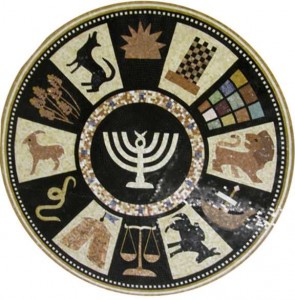
Twelve Tribes of Israel
In light of Paul’s head-scratching use of the phrase, “”not all who are descended from Israel are Israel”, Christian theologians come up with explanations that confuse the issue even more.
My favorite explanation is the one that states unbelieving Israel has been replaced by the Church. This is called “replacement theology.” In this theological system, “Israel” that accepted Yeshua is none other than the Church. Rather than create clarity, Replacement Theology (aka disguised as Fulfillment Theology or Transformation Theology or Promise Theology) contributes more fuzzy thinking since the reader of the New Testament is forced to think “Church” when he reads the term “Israel”. Try to think “Church” in reading Romans 11:26, “and in this way all Israel will be saved.” Thanks, but no thanks. (more…)
Mar 26, 2013
Posted by Scripture Solutions on Mar 26, 2013 | Comments Off on Not All Israel Is Israel Part 1
Is “replacement theology” becoming the newest fad among Christian? Lately I run across more and more Christians who claim the Church has replaced Israel as God’s people. The sad thing is that most of them don’t know why they believe what they claim. As I dig deeper speaking with these individuals, they all share the same defect – they are sadly deficient in their knowledge of the Jewish Scriptures.
For those who teach Israel has been replaced by the Church, Romans 9:6 is an essential verse in their arsenal. On the surface, the verse can be confusing. The verse reads, “For not all who are descended from Israel are Israel.” It’s like saying, “Not all players wearing a LA Dodger uniform on the field at Dodger Stadium and sitting in the dugout are really Dodgers.”
The replacement theologian would say, “Not all Jewish people who are wearing the Jewish uniform and sitting in the Jewish dugout are really members of the team. In fact, the real Jews consist of members of the Church who have placed their faith in Jesus as the promised Messiah.”
Replacement theology can be very confusing. If you follow their line of thinking, in some passages “Israel is the Church” and in other texts, “Israel is the Jewish nation.” Israel keeps switching leagues. Sometimes they are in the National League; then at other times they are in the American League. I don’t know who to root for because I don’t know who is who.





 Hungry people study the choices before them behind the glass case like they are on an archeological dig. We’ll take all the time we need to pick out exactly what we we want to make our gourmet Subway sandwich despite the growing line of impatient people behind us.